
When Markets Meet Geopolitics
Markets have a way of reminding us that the world is bigger than spreadsheets.
The last few weeks was one of those reminders.
A sudden escalation in geopolitical tensions in the Middle East sent oil prices sharply higher and equity markets sharply lower. Headlines moved fast. Markets moved faster. Within days investors were forced to reassess risks that, only a week earlier, felt distant.
Oil surged. Equity markets sold off. Volatility returned.
Moments like this feel chaotic in real time. But when viewed through the lens of history, they follow a surprisingly familiar pattern.
The Shock That Moves Everything
Energy sits at the centre of the global economic system.
When oil prices spike, the effects ripple outward quickly:
- transport costs rise
- inflation expectations move higher
- financial conditions tighten
- equity markets reprice risk
This is why geopolitical events in energy-producing regions have historically triggered some of the fastest market adjustments. What made this episode notable was the speed of the move.
The S&P 500 recently closed more than three standard deviations below its 50-day moving average — an event that has occurred on less than 1% of trading days since 1928.

In market terms, that’s extreme.
These types of moves usually appear during deep bear markets. What makes this moment unusual is that it occurred before the market had experienced a large drawdown.
The selling was violent — but not yet deep.
When markets Become Stretched
Markets, like elastic bands, can stretch only so far before they snap back. Technical indicators currently suggest equities have reached rare oversold levels. Historically, markets are considered oversold when prices fall one standard deviation below their 50-day average. Two standard deviations signals extreme stress.
Three standard deviations is something else entirely. When markets reach these levels, one of two things typically happens. Either the sell-off continues because something fundamentally breaks in the economy. Or the market stabilises and rebounds as the forced selling exhausts itself.
At the moment, the broader economic backdrop does not resemble the conditions that typically accompany deep bear markets. Which raises an interesting possibility: this may be less about economic deterioration and more about a rapid repositioning of portfolios.
Rotation Beneath the Surface
While the headlines focus on falling indices, something more interesting is happening underneath. Markets are rotating.

Energy stocks have surged as oil prices climb. For years investors have been structurally underweight energy. Now, with geopolitical risks rising and commodities strengthening, the sector has suddenly returned to relevance. At the same time, technology and software companies — the market leaders of recent years — have experienced a sharp reset.
Software stocks that once traded at premium valuations are now trading at discounts relative to the broader technology sector. Positioning has flipped quickly, with investors now heavily underweight.
History suggests these types of positioning extremes rarely persist for long.
The Behaviousal Side of Markets
Episodes like this are not just about economics or geopolitics. They are about human behaviour.
Sharp market declines tend to trigger the same sequence:
- leveraged positions unwind
- crowded trades reverse
- short-term investors exit
- volatility spikes
In the process, prices often move further than fundamentals alone would justify. This is why some of the strongest market recoveries occur after periods of intense selling pressure. Not because the world suddenly becomes better — but because the forced sellers run out of shares to sell.
What Comes Next
Markets will now focus on three things.
First, the trajectory of oil prices. Sustained energy shocks can weigh on global growth, but temporary spikes tend to fade once supply stabilises.
Second, geopolitical developments. Financial markets dislike uncertainty far more than they dislike bad news. When uncertainty begins to resolve, markets often recover quickly.
Third, positioning. When markets become as stretched as they currently are, even small positive catalysts can trigger powerful rebounds.
Perspective
Geopolitical events often feel like turning points while they are happening. But history shows that most shocks — even dramatic ones — eventually become chapters rather than endings.
Markets absorb them. Capital adapts. Investors reposition. And over time, the system moves forward.
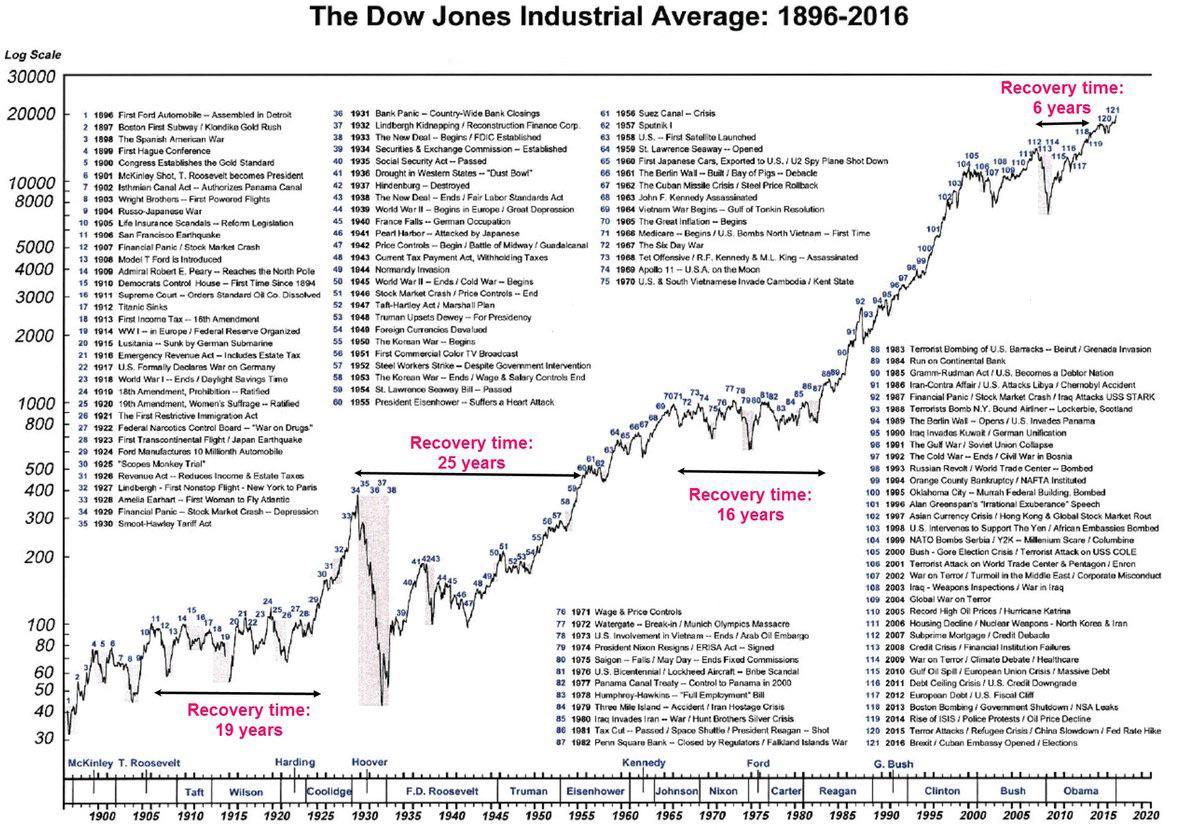
The challenge for investors is not predicting every shock. It is maintaining the discipline to navigate them.
Take the long view.
Ready to grow your wealth?
Let's talk. One call. No risk. Just a way to see if we're a good fit.